
Winter Hydration Tips
Winter may bring a chill, but it doesn’t mean your hydration should take a hiatus. Many people believe that they only need to drink more water in the summer when they sweat a lot, but that’s not true. It’s easy to forget that even during winter, our bodies lose water through perspiration and urine.
Staying hydrated is crucial for our overall health and well-being, regardless of the season. In fact, proper hydration is even more important during the winter months when cold temperatures and dry air can deplete our body’s water reserves.
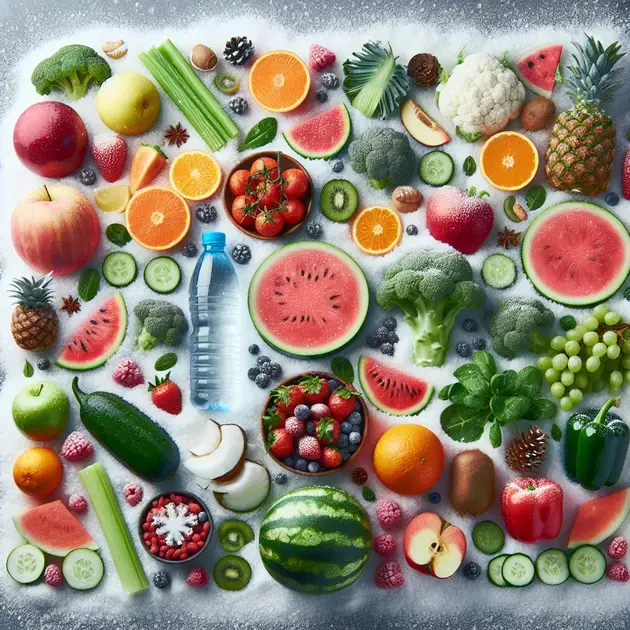
To ensure optimal hydration during winter, it is essential to incorporate hydrating foods into our diet. These foods not only provide water but also offer additional health benefits. Here are 16 hydrating foods that can help you increase your water intake this winter:
- Cucumber: With a high water content of around 96%, cucumbers are an excellent hydrating food. They also provide essential nutrients such as vitamin K and potassium.
- Watermelon: Despite its name, watermelon is not just a summer fruit. It is hydrating all year round and contains about 92% water. Additionally, it is a great source of vitamins A and C.
- Celery: Crunchy and refreshing, celery contains about 95% water. It is also rich in fiber, which aids in digestion and promotes a healthy gut.
- Citrus fruits: Oranges, grapefruits, lemons, and limes are packed with water and vitamin C. These fruits not only keep you hydrated but also support your immune system during the winter season.
- Spinach: This leafy green not only provides hydration but also offers a plethora of nutrients, including iron, calcium, and vitamins A and K.
- Strawberries: These red berries are not only delicious but also hydrating, with a water content of around 91%. They are also a great source of antioxidants.
- Bell peppers: Colorful and crisp, bell peppers contain a high water content along with vitamins C and A. They make a perfect addition to winter salads and stir-fries.
- Broccoli: This cruciferous vegetable is not only hydrating but also rich in fiber and antioxidants. It also provides vitamins C and K.
- Pineapple: This tropical fruit is not only refreshing but also hydrating, with a water content of about 87%. It also contains bromelain, an enzyme that aids digestion.
- Coconut water: While not a food, coconut water is a natural and hydrating beverage that replenishes electrolytes and provides essential minerals.
- Tomatoes: These juicy fruits are not only hydrating but also rich in antioxidants and vitamins C and A. They are versatile and can be enjoyed raw, cooked, or in sauces.
- Cauliflower: This winter vegetable contains about 92% water and is packed with fiber, vitamins C and K, and antioxidants.
- Kiwi: These small fruits are packed with water and provide a burst of vitamins C and E. They also offer dietary fiber, making them a healthy winter snack.
- Radishes: Crisp and spicy, radishes are hydrating and provide a good amount of vitamins C and K. They can be enjoyed raw or cooked.
- Grapes: These tiny fruits offer hydration and are packed with antioxidants, vitamins C and K, and dietary fiber. They make a delicious and healthy winter snack.
- Avocado: Creamy and nutritious, avocados are not only hydrating but also provide healthy fats and fiber. They are a versatile fruit that can be enjoyed in salads, sandwiches, or as guacamole.
Remember, staying hydrated is essential all year round, even during the winter months. Incorporating these hydrating foods into your diet can help you maintain optimal hydration levels and support overall health and well-being. Stay nourished, stay hydrated, and thrive during winter.